

When establishing a corporation in Japan, it’s important to understand the range of taxes that may apply. These obligations vary depending on the entity’s structure, location, and business activities, etc., but the following categories represent the most common taxes imposed on Japanese corporations.
Overview of Corporate Taxes
The table below summarizes key tax types, their taxable bases, filing deadlines, and submission destinations:
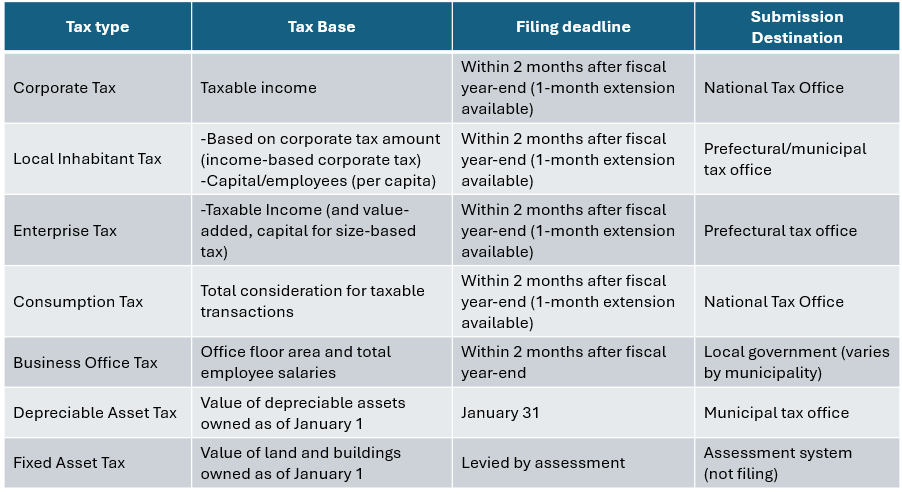
Note: While most tax filings are due within two months of fiscal year-end, a one-month extension is available for certain taxes. Business Office Tax is not eligible for extension.
What This Means for New Corporations
Corporations in Japan—especially Kabushiki Kaisha (KK) and Godo Kaisha (GK)—should prepare for multi-layered tax compliance. In addition to national taxes, local levies based on capital, assets, and employee metrics are common. Timely filing and accurate reporting are essential to avoid penalties and maintain good standing.
*******************************************
This article provides a general overview and includes certain personal interpretations.
The appropriate conclusion may differ depending on each client’s specific circumstances. Before taking any concrete actions or making decisions based on the contents of this article, professional tax advice should be obtained.
Our firm is available to provide consultations, so please feel free to contact us at any time.
All tables and images included in this article are the intellectual property of our office. Unauthorized reproduction, copying, or quotation is strictly prohibited.
If you wish to quote any part of this article, please ensure that the source is clearly indicated and contact us in advance.